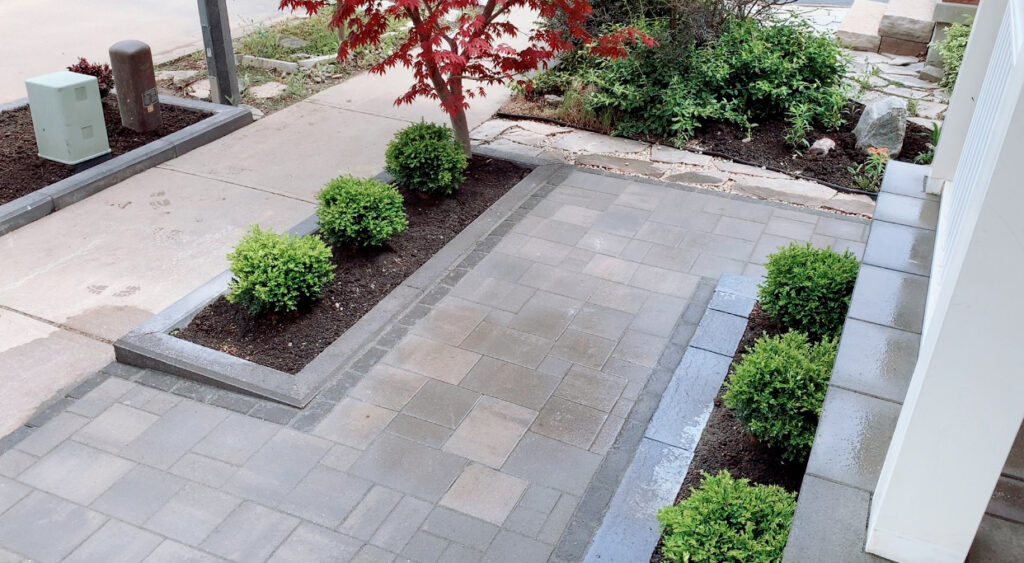
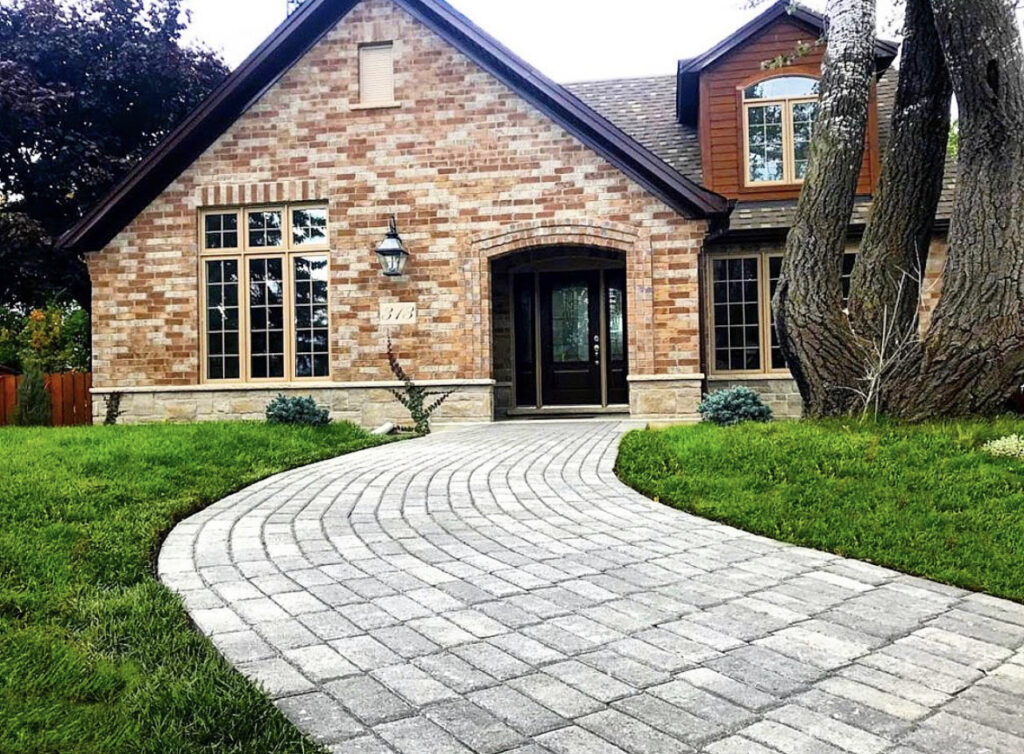
New pavers alone are not a diagnosis or a drainage solution. Before replacing a wet patio, establish where water comes from, how the existing levels direct it and where it can appropriately go. Then decide whether the project needs local repair, regrading or a larger redesign.
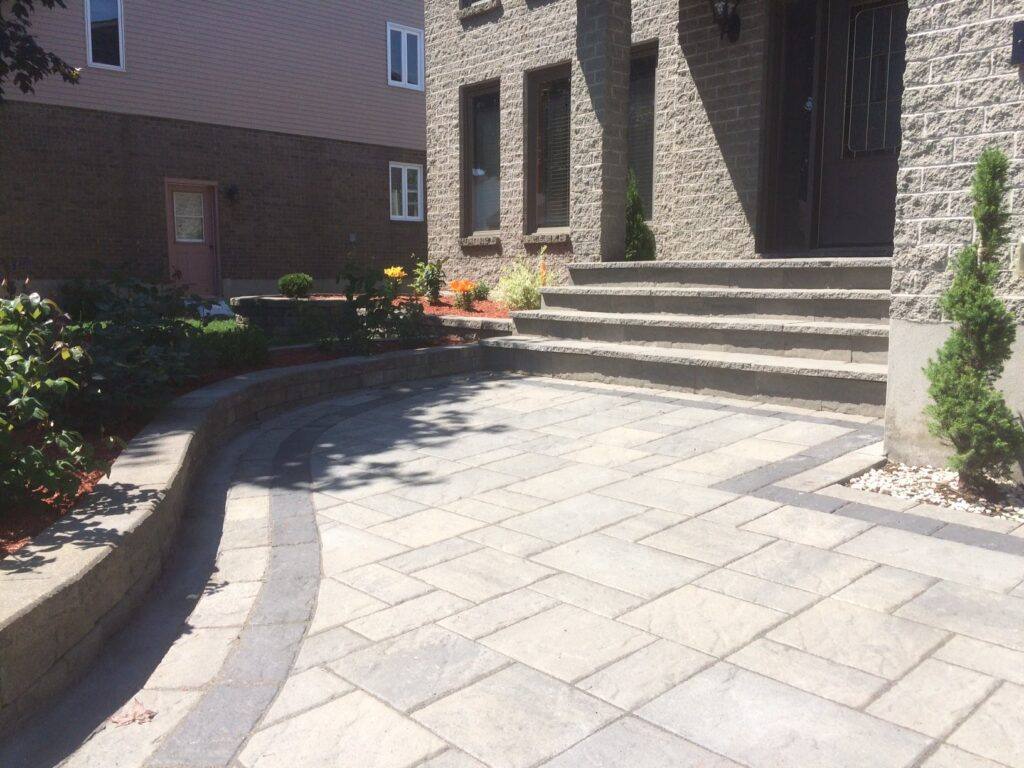
What should you record when the patio gets wet?
Photograph the affected area during or after rain from a safe location. Note where water first appears, which areas remain wet and whether the pattern has changed. Include nearby downspouts, steps and garden edges in the photographs. These observations help explain the problem, but a site assessment is still needed before selecting a repair. Do not infer the cause from one close-up photograph.
Is a low spot the same as a whole-yard grading problem?
No. Ask whether the issue is limited to a small settled area or involves the overall relationship between the house, patio and surrounding yard. A local correction may be different from reconstructing levels across the site. Compare the proposed repair against its stated purpose. Replacing a finish without addressing the assessed cause can leave the original complaint unresolved.
Does adding a drain solve everything?
Ask the designer to identify where the drain would discharge, how it can be maintained and what approvals apply. A drain symbol on a sketch is not a complete drainage design. Discuss access for cleaning and what happens beyond the patio edge. Avoid approving a proposal that simply moves an unexplained water problem toward another part of the property or a neighbour.

When does the municipality become involved?
Requirements depend on the project and location. Burlington publishes grading and drainage submission requirements, including existing and proposed levels, hard surfaces, downspouts and other site information when a plan is required. Burlington: grading and drainage requirements. Ask the City or your own municipality which requirements apply before changing the site. Do not use a neighbour’s project as proof that your proposal needs no review.
How do you compare repair and replacement quotes?
Ask each contractor to describe the assessed issue, the areas being altered and the intended finished levels. Separate reusable paving from new material and identify restoration work. Include related steps, wall edges and access routes in the discussion. A clear scope lets you compare what the work is intended to achieve, rather than choosing between two totals that describe different projects.
Quick answers
Are permeable pavers automatically the answer?
No. Ask whether a complete permeable pavement design is appropriate for your site. The surface product alone does not establish suitability.
Should drainage be discussed before choosing patio stone?
Yes. Resolve the grading concept and construction scope before finalizing the decorative finish.
Discuss your project.
Bring your property location, photographs and priorities to the first conversation. Explore Excavation & Grading, Interlocking Patios, Interlock Repair, Retaining Wall Design & Build to define the work you want.
Sources and further reading
Official guidance checked September 12, 2026. Confirm current requirements for your property and selected products.