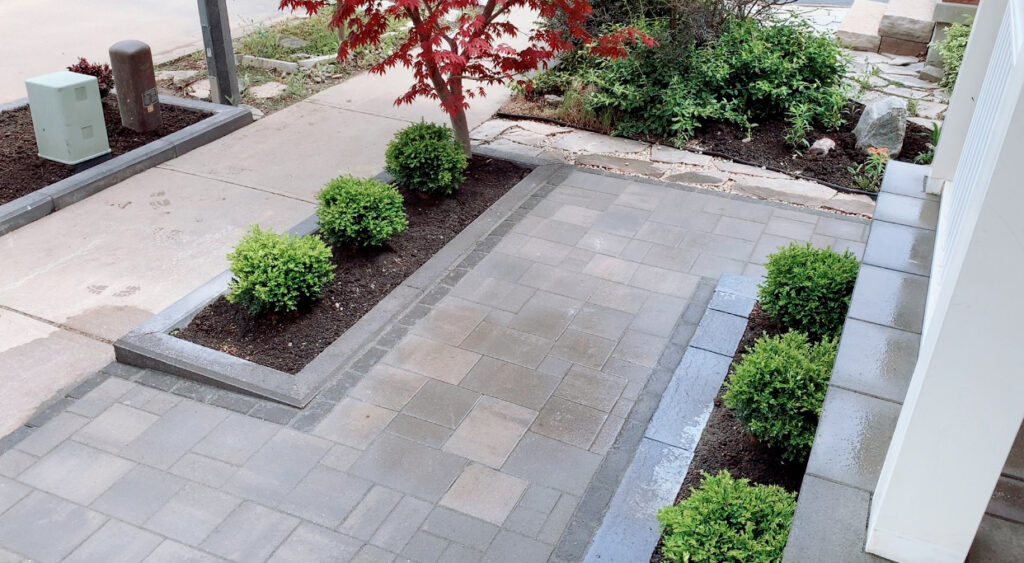
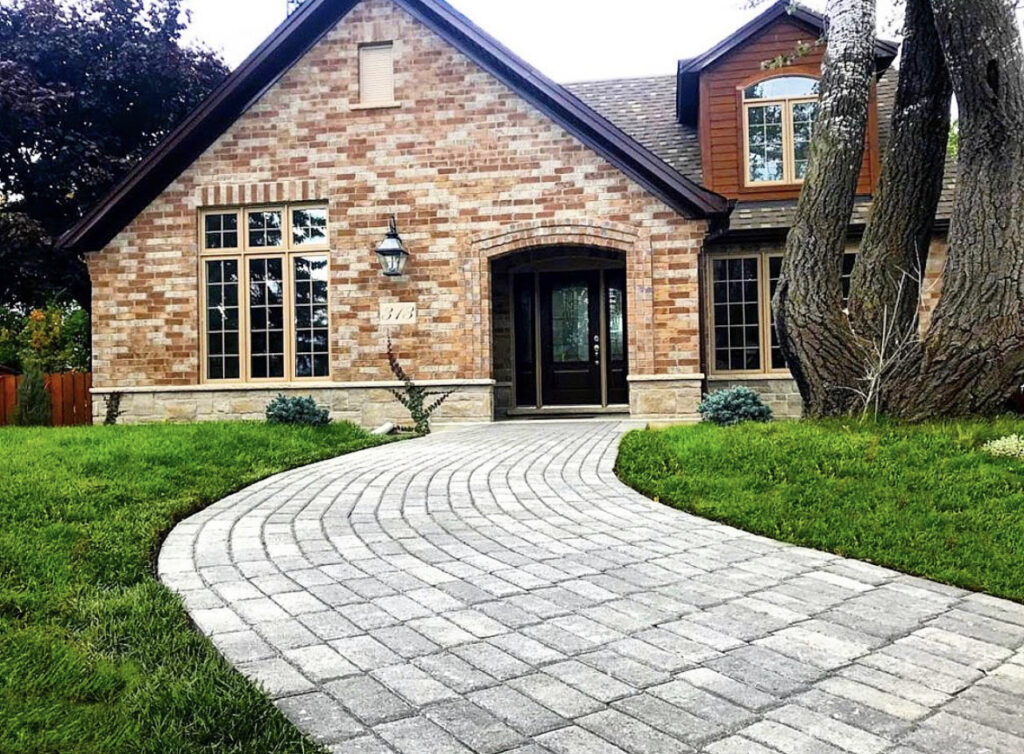
A landscape proposal is easier to compare when it separates defined work, provisional allowances, exclusions and later changes. Before accepting a price, ask what has been measured, what remains undecided and who must approve the next decision.
For property owners planning work in Oakville, Burlington, Milton and Toronto GTA.

What is actually fixed in the proposal?
Begin with the drawing revision, measured areas and product schedule. A line that says “patio installation” leaves important questions unanswered: which surface, what edge treatment, which demolition and where the work stops. Ask the contractor to mark the included area on the same plan used for the estimate. Photographs help explain the starting condition, but they do not replace dimensions or a written description of the assembly.
How should you compare an allowance?
An allowance is a budget placeholder for something not fully selected or measured. Ask what it includes and how the final amount will be calculated. A stone allowance might cover supply while leaving cutting, delivery or installation elsewhere in the proposal. Two similar totals can therefore buy different scopes. Record unresolved selections and their decision dates so that orders are not placed before you understand the difference.

What happens when the site reveals something unexpected?
Discuss the process for documenting an unexpected condition before excavation starts. Request photographs, a description of the proposed response and its cost and schedule effect. The important question is who can authorize the change and how that approval is recorded. Do not assume every unknown is included in a lump sum, or that every discovery automatically justifies an extra. The written scope should make that discussion specific.
Which documents make the comparison useful?
Create one comparison sheet for all bids rather than comparing the last line alone. Keep design responsibilities, applications, utility coordination, access protection, disposal, restoration and handover visible. Ontario One Call provides guidance on public and private utility locates; identify that responsibility before digging. Bring the same brief to each contractor and ask each to identify exclusions explicitly. This is a planning checklist, not a substitute for reviewing your contract.
What to bring to your consultation
- Drawing revision and measured quantities
- Named products and substitution approval
- Allowances and what each includes
- Responsibility for approvals and utility coordination
- Written change approval and completion documents
Bring your available survey, photographs and current drawings. Mark what you want to keep and what you are willing to change. Ask Milton Stone to identify the decisions needed before a detailed proposal can be prepared.
Homeowner questions
Is the lowest quote necessarily incomplete?
No. Different methods, availability and scope can produce different prices. Compare the written inclusions and assumptions before deciding why a quote differs.
Can I choose materials after signing?
Some selections may remain open, but record the allowance, decision deadline and effect of a change before the contractor orders materials.
Project reference: Ontario One Call: homeowner guidance. Check current requirements for your project.
Plan your next step with Milton Stone
Discuss your property constraints and priorities. Explore Milton Stone landscape and pool construction and our service areas.