A properly designed and installed natural stone patio in Ontario can last for decades with appropriate maintenance — even through the relentless freeze-thaw cycles of the Golden Horseshoe — provided the base preparation, drainage, and stone selection are executed to a high standard.
What actually causes stone patios to fail in Ontario winters?
Ontario’s climate is genuinely punishing for outdoor hardscaping. The Greater Toronto Area and surrounding communities — Oakville, Burlington, Milton, Halton Hills — typically experience dozens of freeze-thaw cycles every winter. Water infiltrates any weakness in a patio system, freezes, expands, and pries materials apart from the inside out. The failure almost never starts with the stone itself. It starts below it.
The most common causes of premature failure include:
- Inadequate base depth: Base depth and materials must suit the soil, expected loads and drainage. A shallow or poorly compacted base can contribute to movement; a ground-level patio is not routinely excavated to structural-footing frost depth.
- Poor drainage design: Standing water beneath or around a patio is a direct path to freeze-thaw damage. Grade, slope, and sub-base drainage must be engineered together.
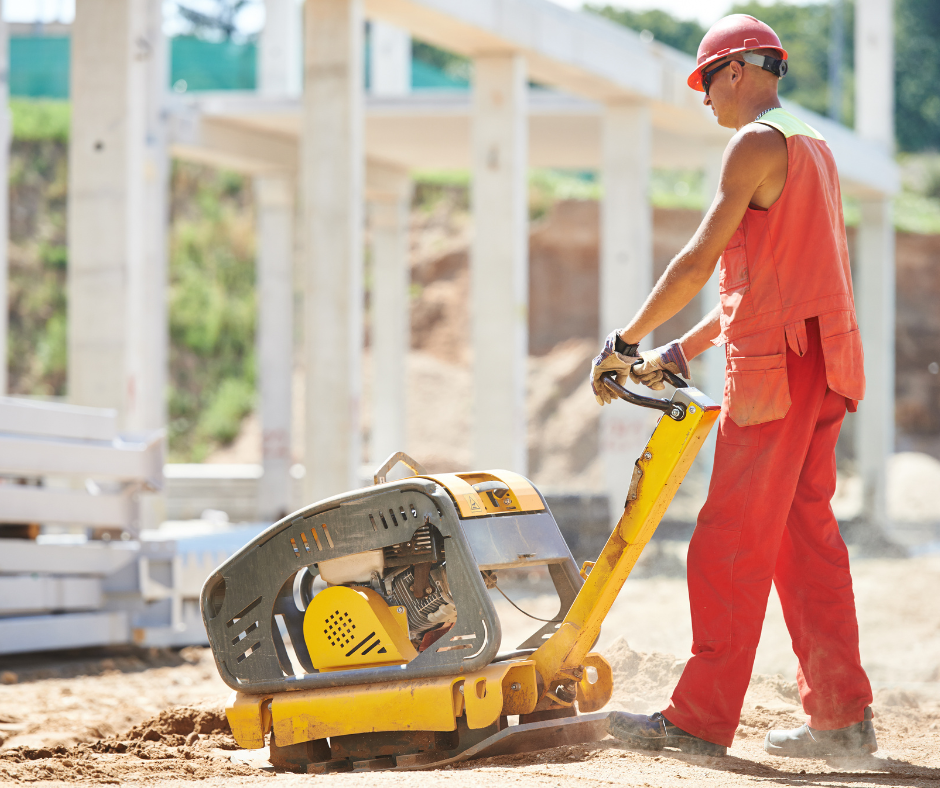
- Wrong gravel or compaction: A granular base must be properly graded, compacted in lifts, and sized to drain freely. Cutting corners here is the single biggest predictor of a patio that fails within five years.
- Inappropriate mortar or joint material: Polymeric sand and mortar mixes must be rated for freeze-thaw exposure. Many generic products are not.
- Wrong stone for the application: Dense, low-absorption stones like granite and bluestone outperform porous options in freeze-thaw environments. High-absorption stones can spall and fracture within a few seasons if unsealed or improperly specified.
Which stone materials last longest through Ontario freeze-thaw cycles?
Not all natural stone is created equal when it comes to Ontario winters. The stones that consistently perform best over decades in this climate share one trait: low water absorption.
- Granite: Exceptionally dense and nearly impervious to water absorption. Granite can be a durable choice, but performance varies by the specific stone, surface finish, installation and exposure. Ask the supplier for relevant test data and maintenance guidance.
- Bluestone (Pennsylvania or Canadian): A long-standing favourite in Oakville and Burlington estate properties. Naturally slip-resistant, dense, and highly durable through freeze-thaw when correctly sealed.
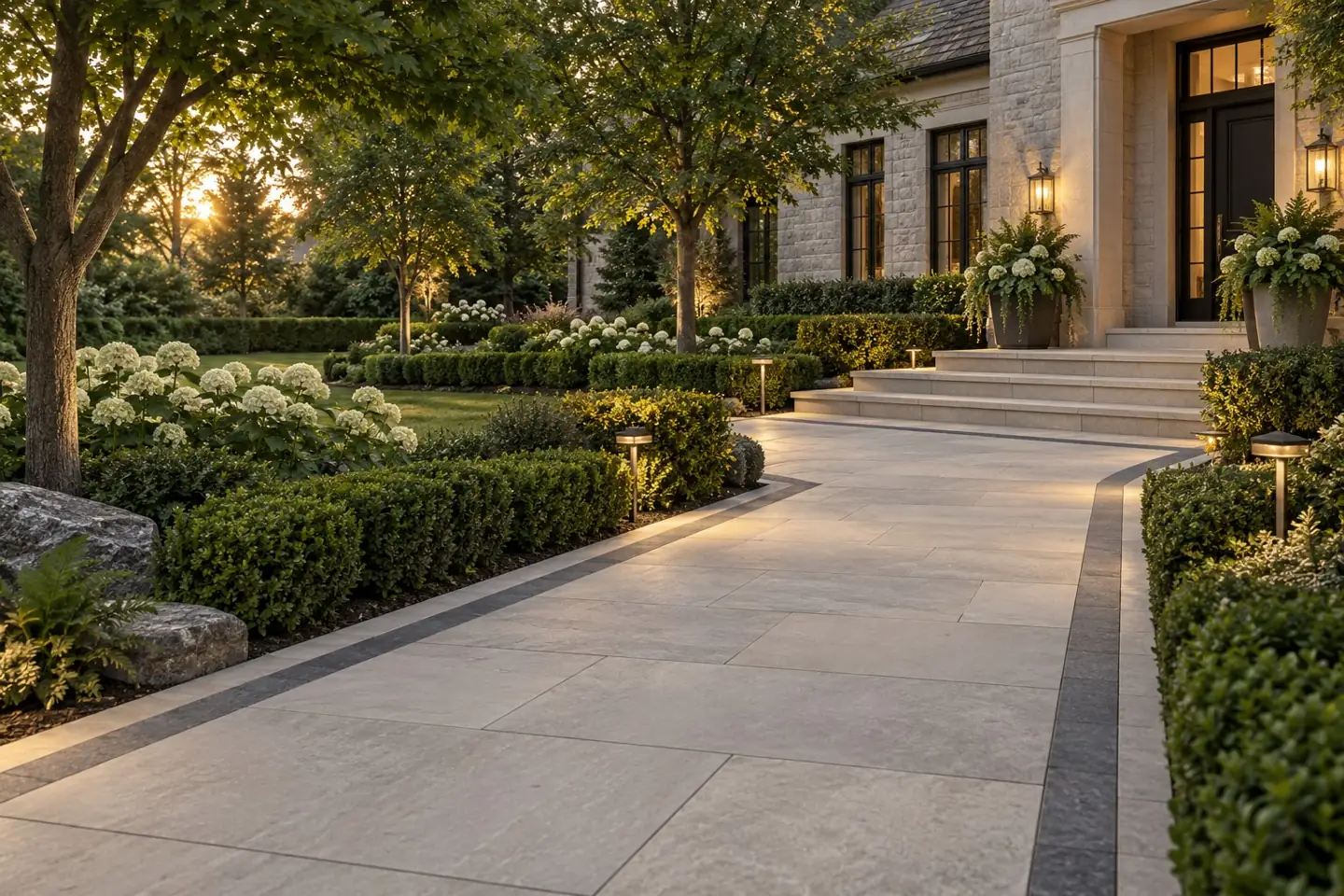
- Limestone: Higher-end limestone — particularly when used in premium applications like the estate driveways Milton Stone has completed — performs beautifully when properly sealed and maintained. It requires more attention than granite but rewards that care with an unmatched aesthetic.
- Porcelain pavers: A modern option with near-zero water absorption. Choose an exterior-rated porcelain product with documented freeze-thaw and slip-resistance performance. The installation still needs drainage, cleaning and joint maintenance.
- Flagstone (tumbled or natural): Performance varies significantly by source and density. A premium, tightly sourced flagstone on a well-engineered base will last decades; a low-grade option will not survive a decade of Ontario winters.
How important is base preparation for stone patio lifespan in Ontario?
It is the single most important factor. Full stop. The most beautiful stone on earth, laid on a compromised base, will begin failing within a few years in this climate. At Milton Stone, under the leadership of Francesco Pettinelli — a respected coach and mentor in the Canadian landscaping industry — base engineering is treated as the foundation of every project, not an afterthought.
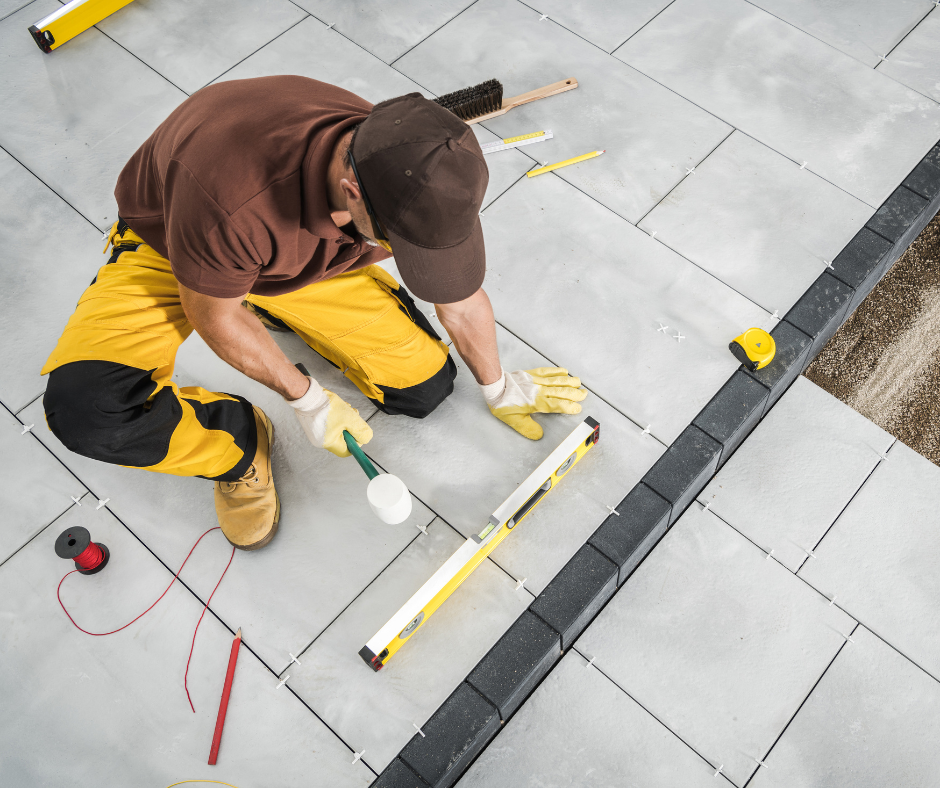
A high-performance base system for an Ontario stone patio typically includes excavation to a depth selected for the soil, loading and drainage conditions, a compacted granular sub-base installed in properly compacted lifts, a coarse bedding layer, and a precisely graded surface that sheds water away from the structure. On premium estate projects, the base work alone can represent a significant portion of the total investment — and it is entirely invisible once the stone is laid. That invisibility is exactly why so many budget installations fail: the homeowner cannot see what they are — or are not — getting.
Do stone patios in Oakville, Burlington, and Milton need permits?
In most cases, a ground-level stone patio does not require a building permit in Halton Region municipalities. However, several conditions can trigger permit requirements or site plan approvals: proximity to a property line or easement, integration with a deck or structure above grade, drainage impacts on adjacent properties, or work within a regulated area near a watercourse or conservation authority jurisdiction. The Niagara Escarpment proximity also introduces additional considerations for properties in Milton and Halton Hills. A knowledgeable contractor will conduct due diligence before any work begins.
How do you extend a stone patio’s lifespan in Ontario?
Even the finest installation benefits from consistent care. The practices that matter most for longevity include:
Reference: Unilock’s paving base-preparation guidance.
- Sealing: Ask the stone supplier whether sealing is appropriate. Follow the compatible product’s preparation and maintenance instructions; sealing does not replace suitable stone selection or drainage.
- Joint maintenance: Inspect and refresh polymeric sand in joints annually. Degraded joints allow water infiltration and weed intrusion.
- Snow removal: Use non-damaging snow-removal tools. Select any deicer according to the stone, joint-material and product manufacturers’ instructions; calcium chloride is not universally safe for every patio.
- Drainage checks: Every spring, verify that surface grades still direct water away from the patio and that any drainage structures are clear.
- Professional inspection: An annual or biennial review by a qualified hardscaping professional catches minor settling or joint issues before they escalate into costly repairs.
What does a premium stone patio project typically cost in the GTA?
Project investment varies considerably depending on stone selection, site conditions, base engineering requirements, scale, and the level of craftsmanship and service you choose. As a general industry reference point, premium estate-scale hardscaping projects in the GTA span a wide range based on all of these variables. Please note: these are general industry ranges and actual pricing varies by company, material and stone choice, quality of construction, and level of service. Milton Stone works exclusively at the upper end of the market, serving discerning homeowners across Oakville, Burlington, Milton, Lorne Park, The Bridle Path, Forest Hill, and Rosedale who are investing in outdoor spaces built to last generations. We encourage you to contact us directly for a tailored consultation and quote specific to your property and vision.
Frequently asked questions
How long does a natural stone patio last in Ontario?
A natural stone patio that is properly engineered, installed on an adequate frost-protected base, and maintained with appropriate sealing and joint care can last for decades, depending on the materials, exposure, installation and maintenance. The base preparation and drainage design are the primary determinants of lifespan — not the stone alone.
What is the best stone for a patio in the Golden Horseshoe climate?
Granite and dense bluestone consistently rank as the most durable options for Ontario’s freeze-thaw conditions due to their low water absorption. High-quality limestone and porcelain pavers are also excellent choices when properly sealed and installed on an engineered base. Stone selection should be matched to both the climate demands and the aesthetic goals of the project.
Why do some stone patios in Ontario crack or heave after just a few years?
Premature failure almost always traces back to insufficient base depth, poor drainage design, or inadequate compaction — not the stone itself. Ontario’s frost depth requires a substantial, properly engineered sub-base. Contractors who cut corners on excavation and base preparation produce installations that cannot survive repeated freeze-thaw cycles.
Does a stone patio in Oakville or Burlington require a permit?
Most ground-level patios in Halton Region municipalities do not require a building permit, but exceptions exist — particularly near property lines, easements, regulated conservation areas, or when a patio is integrated with a raised structure. Properties near the Niagara Escarpment in Milton or Halton Hills may face additional requirements. A reputable contractor will clarify permit requirements before beginning any work.
How do I maintain a stone patio to maximize its lifespan through Ontario winters?
Key maintenance practices include using a compatible sealer only when recommended for the selected stone, at the product’s stated interval, refreshing polymeric sand in joints annually, using non-damaging shovels and only deicers approved for the installed materials, and having a professional inspect the patio every one to two years to catch minor settling before it becomes a major repair.