In Burlington, Ontario, you do not legally need a landscape architect to install a residential pool — but depending on your project’s complexity, grading challenges, or HOA requirements, involving one can save you costly mistakes and permit delays.
What does Burlington actually require to get a pool permit?
Burlington uses a combined residential pool application for zoning, forestry and pool-enclosure review. To obtain that permit, you typically need to submit a site plan showing the pool’s location relative to your property lines, the house, utilities, and fencing. Burlington’s zoning bylaws set minimum setbacks — confirm the distances applicable to your property — and require a compliant pool enclosure (fence) meeting Burlington’s pool-enclosure by-law.
Confirm with Burlington which plans and professional documentation are required for your property. An accurate, scaled site plan is part of the application. In many straightforward cases, an experienced pool contractor like Milton Stone can prepare or coordinate that site plan documentation for you. Where the site gets complicated — significant grade changes, proximity to a ravine or conservation area, or complex drainage — additional professional input may be required or strongly advisable.
What’s the difference between a landscape architect, a pool contractor, and a landscape designer?
This is one of the most common sources of confusion for Burlington homeowners:
- Landscape Architect: A licensed professional (regulated in Ontario under the Ontario Association of Landscape Architects) who can stamp drawings, manage complex grading, drainage design, and navigate Conservation Halton approvals for properties near regulated features like creeks or wetlands.
- Pool Contractor: A qualified trades company (ideally with APSP or IOPCA membership) that designs, excavates, installs, and finishes your pool. A reputable contractor handles Building Department coordination, site plans, and the full construction process.
- Landscape Designer: A design professional (not licensed to stamp engineering drawings) who focuses on the aesthetic integration of the pool into your outdoor living space — plantings, patios, lighting, and hardscaping.
For the majority of Burlington residential pool projects, a skilled, experienced pool contractor handles the entire process from permit to final inspection without requiring a separate landscape architect. The contractor coordinates with the city and manages the required documentation.
When does a Burlington pool project actually need a landscape architect?
There are specific situations where bringing in a landscape architect is genuinely worthwhile — or may even be required:
- Conservation Halton regulated areas: If your property is near a watercourse, floodplain, or environmentally sensitive area regulated by Conservation Halton, you may need a permit from them in addition to the city permit. A landscape architect or engineer familiar with Conservation Halton’s requirements can be invaluable here.
- Significant grade changes: Burlington’s Escarpment and varied topography mean some properties have dramatic slopes. Complex retaining walls, drainage engineering, or cut-and-fill grading may require stamped drawings from a landscape architect or civil engineer.
- Large-scale outdoor renovation: If you’re simultaneously redesigning your entire outdoor space — major hardscaping, drainage systems, planting plans, pergolas, and a pool — a landscape architect can unify the design and coordinate all trades efficiently.
- HOA or heritage requirements: Some Burlington neighbourhoods or newer developments have design covenants that may require landscape architect involvement before changes are approved.
How does fibreglass pool installation in Burlington differ from a concrete pool when it comes to permits and design?
The permit process in Burlington is largely the same whether you choose fibreglass or concrete. Both require a building permit, an approved site plan, and a compliant pool enclosure. However, fibreglass pools offer some practical advantages in the local context:
- Faster installation (typically days for shell placement versus weeks for concrete forming) means less disruption to your yard and neighbours.
- Fibreglass pools are less prone to algae and surface damage, which matters during Burlington’s freeze-thaw winters.
- The smooth shell surface requires less aggressive chemical treatment, which can be a consideration near Conservation Halton regulated areas.
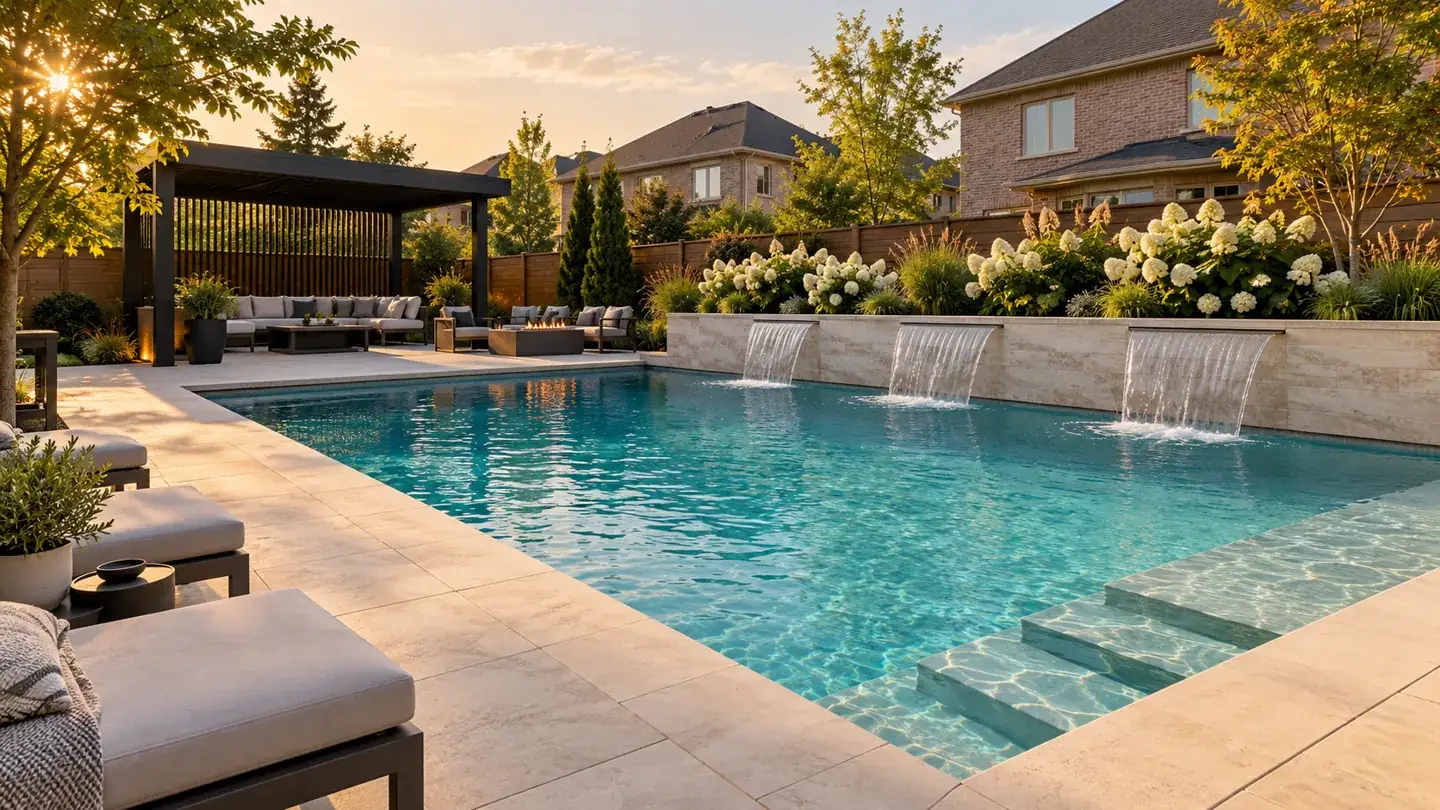
From a design standpoint, fibreglass pools come in fixed shell shapes, so the aesthetic planning — how the pool integrates with your deck, landscaping, and fencing — happens around the shell selection. This is where experienced contractors and designers add real value, ensuring the finished outdoor space feels cohesive and intentional.
What questions should Burlington homeowners ask before hiring anyone for a pool project?
Before signing any contract, ask these questions to protect yourself:
- Will you pull the building permit, and are you familiar with Burlington’s specific setback and fencing requirements?
- Is my property near a Conservation Halton regulated area, and if so, how will that be handled?
- Who prepares the site plan, and is it sufficient for the city’s permit application?
- Do you have experience with the soil and grading conditions common in my neighbourhood?
- What does the project timeline look like, including permit approval?
A trustworthy contractor will answer these questions confidently and transparently. If a contractor dismisses permit questions or is vague about Conservation Halton requirements, consider that a red flag.
Does Milton Stone handle the full pool permitting process in Burlington?
For application requirements, consult Burlington’s residential pool permit guidance.
Yes. Milton Stone manages the complete process for Burlington homeowners — from initial design consultation and site assessment through permit application, installation, and final inspection. The team understands Burlington’s zoning bylaws, has experience with Conservation Halton permit requirements, and coordinates with the City of Burlington’s Building Department on your behalf. For projectswith more complex site conditions, Milton Stone works alongside the right professionals to ensure nothing is missed.
If you’re considering a pool for your Burlington home and want straightforward, honest guidance on what your specific property requires, contact Milton Stone for a free consultation. There’s no obligation — just clear answers tailored to your yard, your neighbourhood, and your vision.
Frequently asked questions
Do I need a landscape architect to get a pool permit in Burlington, Ontario?
Confirm with Burlington which plans and professional documentation your property requires. The residential pool application includes site-plan information and municipal reviews; complex sites may need additional professional input. A landscape architect may be advisable for complex sites near Conservation Halton regulated areas or with significant grading challenges.
Does Conservation Halton affect pool installation in Burlington?
Yes, if your property is near a regulated watercourse, floodplain, or environmentally sensitive area, Conservation Halton may require a separate permit in addition to the City of Burlington building permit. It’s important to check your property’s status before starting any excavation.
What are Burlington’s setback rules for in-ground pools?
Burlington’s zoning bylaws generally require in-ground pools to be set back a minimum of 1.2 metres from side and rear property lines, though specific requirements can vary by zone and lot configuration. Always confirm current requirements with the City of Burlington or your contractor before finalizing pool placement.
How long does it take to get a pool permit in Burlington?
Pool permit timelines in Burlington vary depending on application completeness and seasonal demand. Submitting a thorough, accurate application — with a proper site plan and all required documentation — typically results in faster approval. Your contractor should advise you on current wait times when planning your project.
Is a fibreglass pool a good choice for Burlington’s climate?
Fibreglass pools are generally well-suited to Burlington’s climate. The flexible shell handles freeze-thaw ground movement better than concrete in many cases, and the non-porous surface is less vulnerable to algae growth and chemical demands during the shoulder seasons. Proper winterization is still essential for any pool type in the Greater Toronto Area.