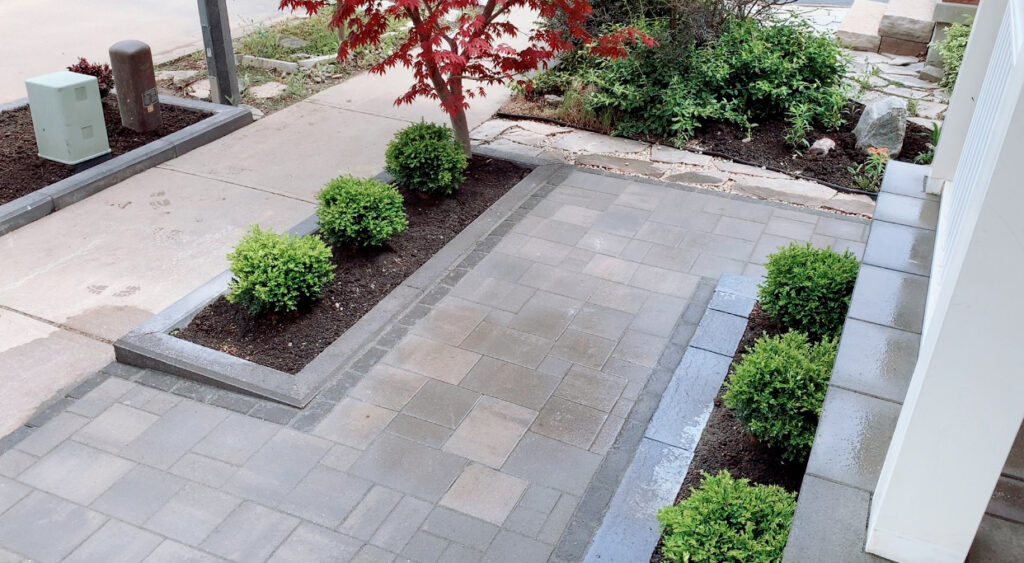
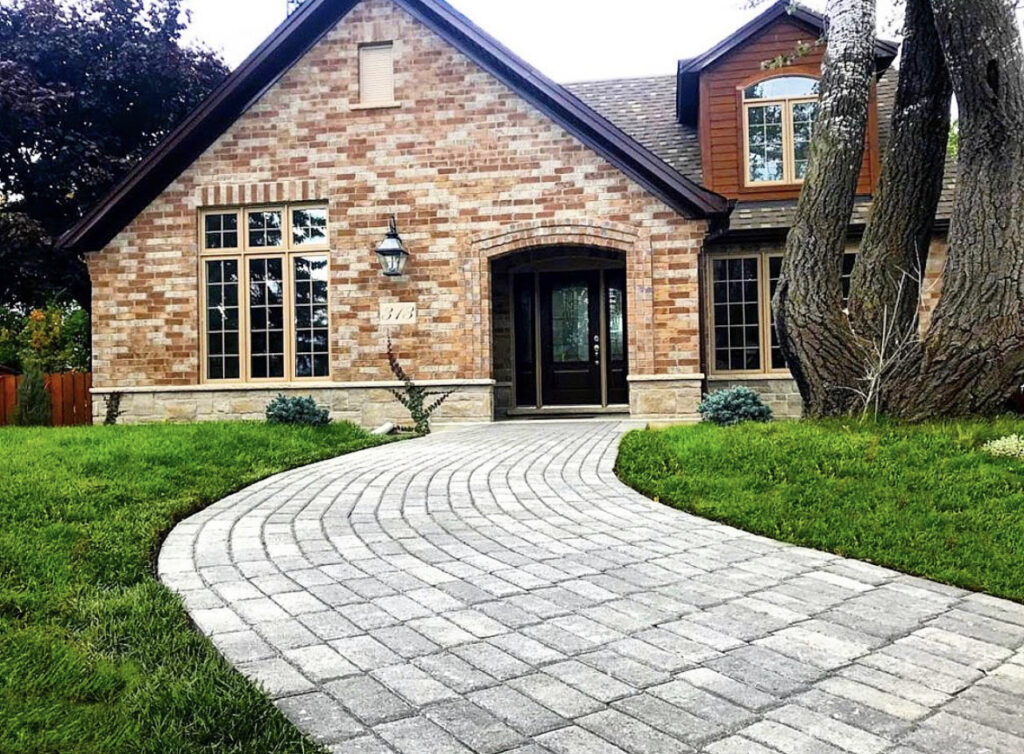
Commercial hardscape work needs to improve the property while accounting for the people who use it every day. Start with access, operations and existing conditions, then define the materials and construction phases. A coordinated scope helps owners and managers compare proposals on more than the finished area alone.
Map how the property operates
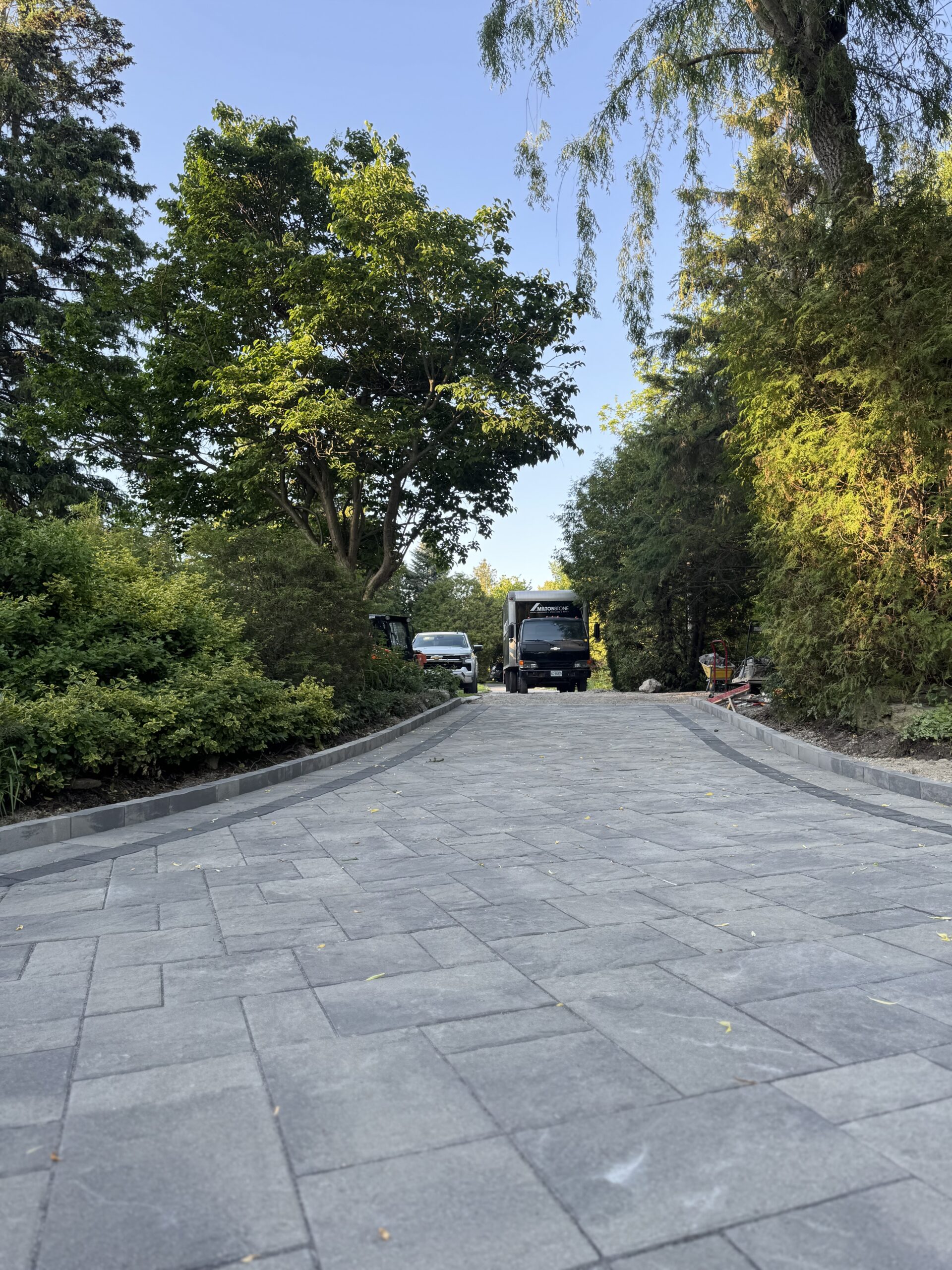
For commercial landscape construction, identify pedestrian entrances, deliveries, parking, waste collection and emergency access. Commercial property hardscapes should be reviewed with the owner or manager and relevant design professionals. Note busy periods and areas that cannot be closed at the same time. These constraints belong in the brief before a contractor develops the work programme.
Match surfaces to their actual role
Discuss where commercial interlocking or commercial concrete will be used and what traffic or equipment each area must accommodate. Establish the design requirements with the responsible professionals. Review transitions, drainage and access needs as well as colour and texture. A product that suits a quiet seating area should not automatically be specified for a service route.
Adapt the programme to the property type
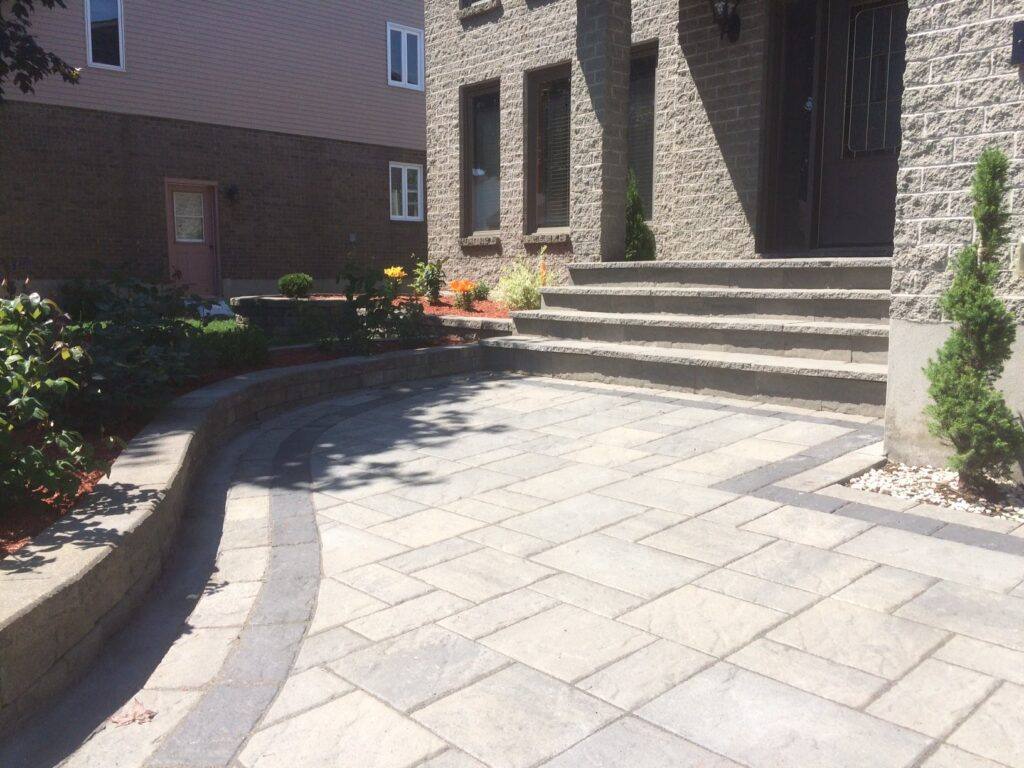
Mall and plaza interlocking needs coordination with tenants, visitors and deliveries. Contracting services for churches may need to accommodate services, community events and particular entrance requirements. Develop phasing around those activities. Ask what temporary routes, separation and communication the proposal includes, and identify who will coordinate changes with occupants.
Distinguish targeted repairs from renewal
For commercial property repairs, document damaged edges, uneven areas and other reported concerns. Ask which repairs can be defined from inspection and which need further investigation. Property services can be discussed in relation to the wider site. Avoid repeatedly patching a visible symptom without understanding the surrounding condition and the likely cause.
Make handover useful for the operating team
Agree the records, care information and points of contact the manager will receive. Review the finished work against the scope, including transitions and restored areas. Explain any remaining decisions or scheduled follow-up plainly. An effective commercial project leaves the property team with a clear understanding of what was completed and how the new surfaces should be maintained.
Questions, answered.
Can commercial hardscape work be phased?
Often phasing can be explored, but the safe and practical sequence depends on the property, operations and construction scope.
How should managers compare proposals?
Compare equivalent areas, preparation, materials, access measures, phasing, restoration and exclusions rather than only the total price.
Sources and service information: Milton Stone’s Commercial Landscape construction, Commercial Property Hardscapes, Commercial Interlocking. For company background and locations, see About Milton Stone and service areas. Product selections and site-specific requirements are confirmed during project planning.