To fix a settling patio after winter, you need to identify the cause — usually frost heave, eroded base material, or poorly compacted sub-base — then either re-level individual stones or slabs, rebuild the base layer, or call a hardscaping contractor for permanent patio settling repair before the damage spreads.
Why does a patio settle after winter in the first place?
Milton and the broader Halton Region sit in one of Canada’s most punishing freeze-thaw zones. Ground temperatures routinely drop well below freezing from November through March, and the soil — much of it heavy clay — absorbs moisture and expands when it freezes. When spring arrives and that moisture releases, the ground contracts again. This cycle, repeated dozens of times each winter, physically lifts and drops whatever is sitting on top of it.
The result is frost heave: your patio stones, concrete slabs, or pavers shift upward unevenly and never quite settle back to their original position. Compound that with spring rain washing away fine particles in a poorly built base, and you have the recipe for tripping hazards, pooling water, and cracked materials.
How can I tell if my patio has a base problem or just surface settling?
This is the most important diagnostic question, because the fix is completely different depending on the answer. Here is what to look for:
- Surface settling only: A few individual pavers or flagstones are high or low, but the surrounding area feels solid when you press on it. The sand or jointing material may have washed out slightly.
- Base failure: Multiple sections rock or flex when you walk on them, water pools in new places, and you notice a soft or spongy feel underfoot. Edges may be dropping away from the house or from a retaining wall.
- Sub-base failure: Large sections have shifted together as a unit, cracks run across multiple slabs in the same direction, or there is a visible slope change that was not there before.
In Milton’s clay-heavy soils, base and sub-base failures are more common than homeowners expect. What looks like a simple re-leveling job on the surface often reveals inadequate gravel depth or a compaction problem once the stones are lifted.
What is the step-by-step process for DIY patio settling repair?
If the damage is limited to a few loose or uneven pavers and the base beneath feels firm, a careful DIY repair is reasonable. Here is the general process:
- Mark your high and low spots using a long level or a straight board before you start. A 2 mm lip is a cosmetic issue; anything over 6 mm is a tripping hazard and should be corrected.
- Remove the affected pavers or stones carefully, keeping them in order so you can replace them in the same pattern.
- Assess the bedding layer. For interlocking concrete pavers, this is typically a layer of coarse concrete sand. For flagstone or natural stone, it may be a mortar bed or a sand-and-stone-dust mix. Add or remove material as needed to achieve the correct grade.
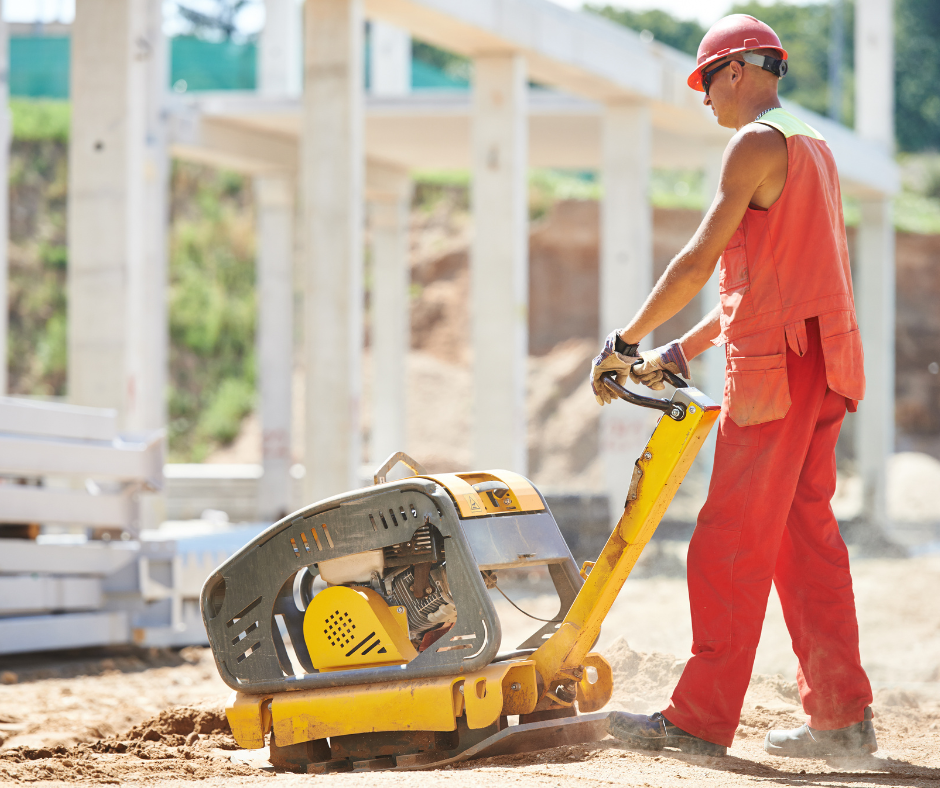
- Re-compact the bedding layer before resetting stones. A hand tamper works for small areas.
- Reset the pavers or stones and check them with your level continuously as you go.
- Refill joints with polymeric sand or the original jointing material, then compact again lightly and sweep clean.
- Check drainage. The finished surface should slope away from your home at roughly 1–2% grade (about 1 cm of drop per metre) to prevent water from pooling against the foundation.
A critical caution for Milton homeowners: if you discover soft, dark, organic-smelling soil beneath the gravel base, stop. That is a sign of inadequate excavation depth from the original installation. Patching over an organic sub-base will produce the same settling problem every single spring.
When should I stop DIYing and call a hardscaping contractor?
There are clear signals that patio settling repair has moved beyond a weekend project:
- More than roughly 10–15% of your patio surface is affected
- The patio abuts your home’s foundation or a retaining wall that is also showing movement
- You find soft spots, voids, or organic material below the base layer
- Water is now draining toward the house rather than away from it
- Concrete slabs (rather than individual pavers) have cracked or shifted — these typically require professional equipment to lift and re-set
- The patio was installed less than five years ago — premature settling often indicates a warranty or workmanship issue worth investigating
A durable repair starts by identifying unsuitable or eroded material, restoring support and correcting drainage. Base thickness must suit the soil, loads and pavement system; a patio base is not automatically excavated to the local frost depth.
Do I need a permit to repair or rebuild a settling patio in Milton?
For most residential patio repairs — re-leveling existing pavers, replacing a damaged slab section — no building permit is required in the Town of Milton or surrounding Halton municipalities. However, if your repair involves significant changes to grading, drainage, or structures near a lot line, or if your property backs onto a conservation area managed by Conservation Halton, it is worth confirming with the Town before you start. Rules around impervious surface coverage and lot grading can affect larger projects. A knowledgeable local contractor will flag these issues before work begins.
How do I prevent my patio from settling again next winter?
The single most effective prevention is a correctly built base from day one — proper excavation depth, well-graded and compacted granular material, and a surface that drains water away efficiently. Beyond that, there are a few maintenance habits that genuinely help:
- Inspect joints for loss or deterioration and repair them using the jointing manufacturer’s instructions. Do not simply sweep new polymeric sand over existing hardened joints each fall.
- Keep gutters and downspouts directed well away from the patio perimeter. Concentrated water discharge is one of the fastest ways to undermine a base.
- Avoid using steel-edged snow shovels or ice picks directly on paver surfaces — surface chips create entry points for moisture.
- Use only traction or de-icing products permitted by the paving manufacturer’s care guidance.
Milton Stone has been helping homeowners across Oakville, Burlington, Milton, and Halton Hills build and repair outdoor living spaces that stand up to southern Ontario winters. If your patio has shifted this spring and you want an honest assessment of what it will take to fix it properly, we would be glad to take a look.
Frequently asked questions
How deep should a patio base be in Milton, Ontario to prevent frost heave?
There is no universal patio-base depth for every Milton property. The design must account for soil, drainage, expected loads and the paving system. Ask the contractor to specify the excavation, aggregate layers and compaction requirements for your site.
Can I fix a settling concrete patio slab myself?
Small cracks and minor unevenness in a concrete slab can sometimes be addressed with self-leveling concrete filler or foam lifting (slab jacking), but large shifts or base failures typically require professional equipment and a full assessment. Attempting to patch over a failing base usually results in the same problem recurring within one to two seasons.
Why does my patio keep settling even after I’ve fixed it twice?
Recurring settling almost always points to a base problem rather than a surface problem. Common causes include inadequate excavation depth, organic material left in the sub-base, poor drainage allowing water to continuously erode the base, or a water source like a downspout directing flow toward the patio. A permanent fix requires addressing the root cause at the base layer.
How long does patio settling repair typically take?
Re-leveling a small section of loose pavers — say, up to a few square metres — can often be completed in a half-day to a full day. A larger repair involving base reconstruction may take two to four days depending on the size of the area, soil conditions, and how much material needs to be removed and replaced. Your contractor should be able to give you a realistic timeline after the initial site assessment.
Is spring or fall a better time to repair a settling patio in Halton?
Spring is the most practical time because the winter’s full damage is visible and the ground has thawed enough to work safely. However, fall repairs — completed before the ground freezes — are also effective and can prevent a problem from getting worse over another winter. Summer is equally fine for most patio settling repairs. The key is not waiting: uneven surfaces collect water, and water accelerates further base erosion with every rain event.