A patio works best when its size and layout follow the furniture, movement and activities it needs to support. The paving pattern comes next. For Oakville, Burlington and Milton homeowners, a considered plan can make an ordinary backyard easier to use without filling every available area with stone.
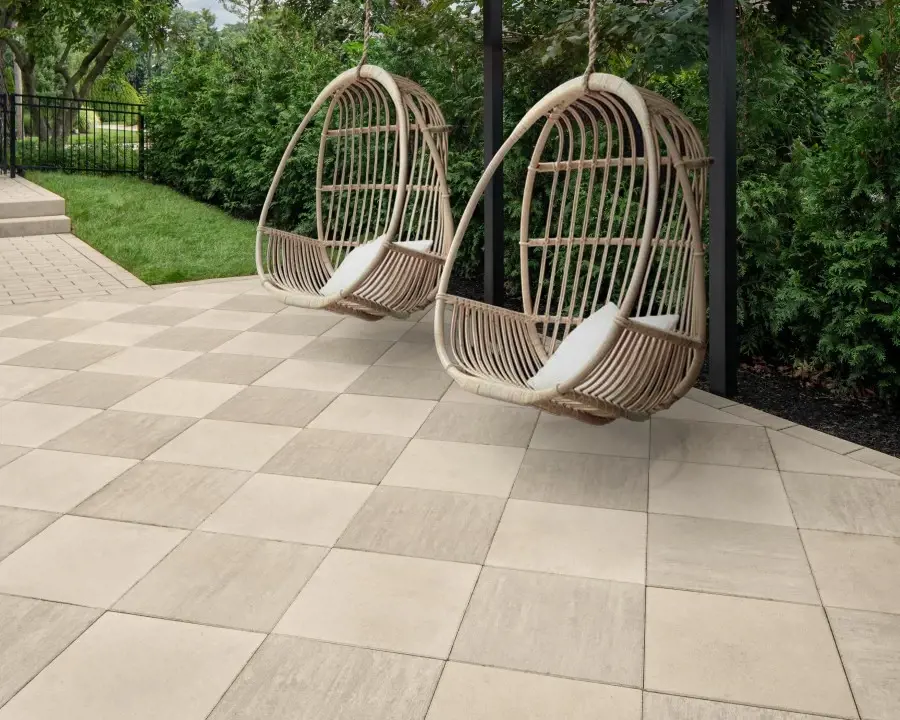
Size the patio around real furniture
Start with the dining table, chairs, lounge seating and any cooking area you expect to use. Show chairs pulled out and allow a sensible route around occupied spaces. Interlocking patios can contain several outdoor rooms, but each needs a clear purpose. Test a busy family evening on the plan: someone cooking, others seated and children moving between the house and garden.
Choose the principal paving direction
Relate the main paving lines to the house, pool or other dominant feature. Consider how the pattern finishes at corners and doorways before approving it. The Design Lab can help narrow the visual direction. Check current manufacturer guidance for the actual product and application; a product’s appearance in a photograph does not specify the base, joints or edge system.
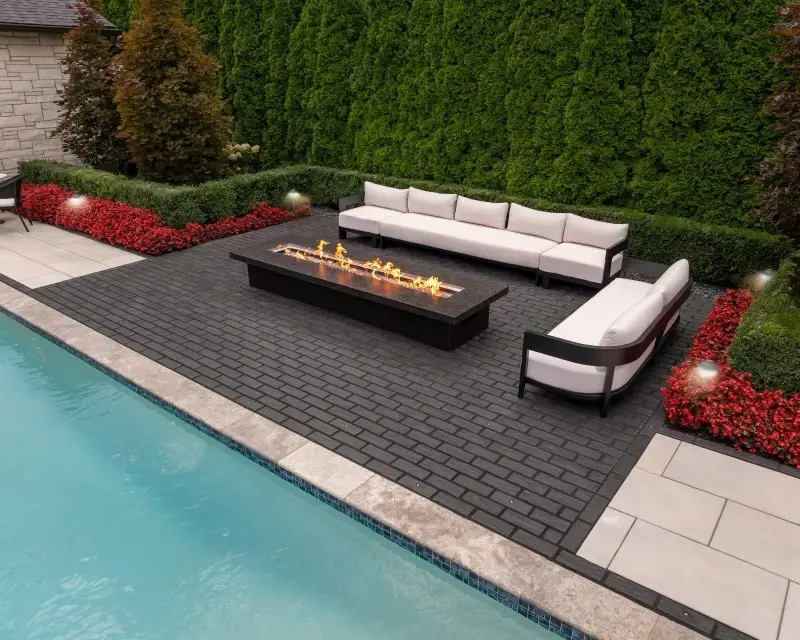
Give borders a deliberate job
Borders and edging can frame a terrace, distinguish a route or provide a transition to planting. Decide whether the border should be noticeable from indoors or quietly finish the paving. Too many colour changes can divide a modest garden into small fragments. Compare a simple perimeter treatment with a more decorative option using the same plan and furniture layout.
Separate visual edging from structural restraint
A decorative band and an interlocking edge restraint are not automatically the same thing. Ask how the installation will restrain the paving at lawns, beds and adjoining surfaces. Review the complete proposed detail and its compatibility with the paver system. This is a useful quotation question because much of the work that supports the finished appearance is not visible in a final photograph.
Finish the transitions and maintenance plan
Discuss drainage, door thresholds, step connections and how adjoining planting or lawn will meet the patio. Ask how cleaning and joint maintenance should be handled for the selected materials. If the garden will be completed in phases, confirm the temporary perimeter and future connection before construction. A complete proposal identifies these details rather than leaving them as small decisions for the final day.
Questions, answered.
How do I decide how large my patio should be?
Draw the furniture at its actual size and test movement around it. Let the intended activities guide the paved area.
Is a decorative border also an edge restraint?
It can be part of a designed edge system, but appearance alone does not establish restraint. Confirm the installation detail.
Sources and service information: Milton Stone’s Interlocking Patios, Borders & Edging, Interlocking Edge Restraints. For company background and locations, see About Milton Stone and service areas. Product selections and site-specific requirements are confirmed during project planning.