New tile can transform a pool or custom spa, but a successful restoration starts before the first replacement tile is installed. The existing surface, material suitability and the wider repair scope need to be understood together. When tile has failed, replacing its appearance alone may leave the cause unresolved.
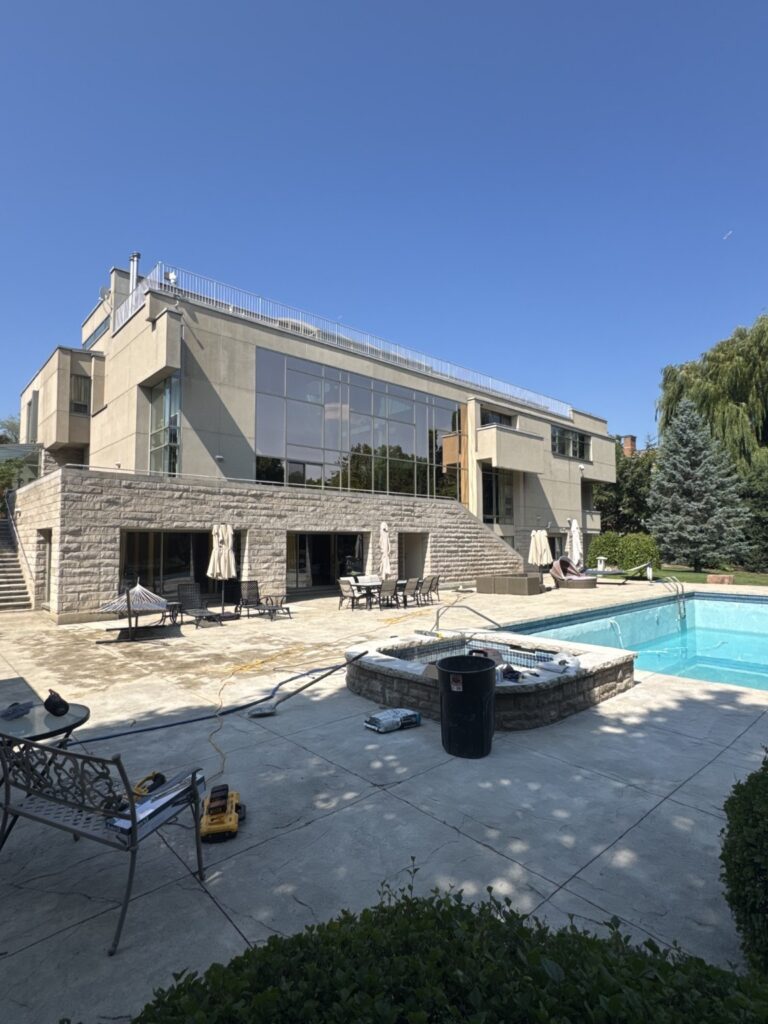
Our Bridle Path pool and custom spa restoration case study follows a Toronto estate project that began through a referral. The homeowner needed help with an unsatisfactory previous spa-tile installation and wanted to use tiles already owned from the original pool construction.
Assess the repair before selecting the finish
A restoration conversation should distinguish cosmetic changes from defects that need investigation. Loose or damaged tile, visible cracks, recurring problems and concerns about water loss are different observations; they should not automatically receive the same repair specification.
Useful starting information includes when the symptoms appeared, previous repair records, photographs and the original product information if available. Ask the contractor what can be established during the initial visit and what may only become clear after removal. A written scope should explain how newly exposed conditions will be discussed before additional work proceeds.
Can existing homeowner-supplied tile be used?
In the Bridle Path project, the client’s existing tiles were used for the spa interior. For any new enquiry, suitability must be checked rather than assumed. Having enough matching tile is only part of the decision: identification, intended application, condition and compatibility with the proposed installation matter too.
LATICRETE’s swimming-pool guidance describes a coordinated approach to installation materials, including preparation, waterproofing, adhesives and grout. Its technical design manual for tiled pools, fountains and spas explains the importance of selecting materials suitable for submerged use and the relevant exposure conditions. An attractive tile intended for another setting is not automatically suitable for a pool or outdoor spa.
These references support planning; they do not identify the products used on this particular estate. The appropriate installation system must be specified for the actual tile, substrate and conditions.
Review the pool and spa as connected spaces
The estate work extended beyond the spa interior. Milton Stone also carried out concrete-pool repairs and replaced damaged glass at the infinity edge. This broader review allowed the owner to address several issues within one coordinated project.
When planning pool remodeling, list the elements you want assessed: tile, coping, adjacent paving, water features and any specialised edge details. Clearly distinguish included repairs from items that require a separate specialist assessment or proposal.
What should a pool restoration proposal explain?
- The existing condition and the agreed areas of repair.
- Removal and preparation included in the price.
- Who supplies the tile and how its suitability and quantity will be checked.
- The proposed installation materials and relevant manufacturer requirements.
- Protection of nearby stonework, planting and outdoor spaces.
- How unexpected conditions, changes and additional costs will be authorised.
- The expected sequence, curing requirements and return-to-use instructions.
- Handover, maintenance information and the scope of aftercare.
A proposal should be clear enough that you can understand what is being restored and what remains outside the contract. That matters especially on a large property with several pools, terraces or water features.
Allow time for the installation system
The date tile work finishes is not automatically the date a pool or spa can be filled. LATICRETE’s installation guidance specifically calls for sufficient curing before filling, following the applicable product instructions. Ask for the handover sequence in writing, including who confirms readiness and which care instructions apply.
Scheduling should also account for access, deliveries, removal work and any associated repairs. A realistic programme makes room for these stages rather than presenting tile installation as the entire project.
How much should you budget?
Milton Stone’s indicative pool restoration range starts around $20,000 and can exceed $50,000, depending on the scope and existing conditions. This is a planning range for restoration work, not a price for every repair and not the disclosed cost of the Bridle Path project.
Review our project pricing guides, then request an assessment of the actual work. Tile area, removal, substrate repairs, coping, access and additional pool features can all affect the proposal.
From one restoration to a continuing relationship
Following the pool and spa work, the Bridle Path clients invited Milton Stone back for natural-stone repairs and rooftop-terrace work. For us, that ongoing relationship is part of the project story: attentive communication and careful execution matter as much as the finished photographs.
Start with your property’s needs
Milton Stone works on pool and landscape projects in Toronto, Oakville, Burlington, Milton and the surrounding GTA. If your pool or custom spa needs attention, share its location, photographs, repair history and the changes you are considering.
View the Bridle Path estate restoration, explore pool tile and mosaic services, or request a project consultation.
Project account and indicative pricing: Milton Stone. Technical references: LATICRETE resources linked above, reviewed October 2026. Product selection and installation details require project-specific assessment.